


Synthetic Paper/Stone Paper (PE + CaCO3) Longitudinal Stretching Production Line
Keywords:
Synthetic Paper/Stone Paper (PE + CaCO3) Longitudinal Stretching Production Line
Category:
Related products

Product Description
1. Product Overview of Stone Paper:
Stone paper is a novel material that falls between paper and plastic, capable of replacing certain functional and specialty papers as well as most conventional plastic packaging. It boasts low costs and controllable biodegradability, helping users cut expenses without generating pollution. From the perspective of substituting traditional paper, it conserves substantial forest resources and reduces secondary pollution associated with papermaking. As an environmentally friendly new material, the stone‑paper industry draws on a wide range of raw materials, leaving ample room for product upgrades, technological advancements, and the expansion of application areas.
2. Product Features:
The production process of stone paper is simple; it requires substantial investment, delivers high output, and consumes low energy. By eliminating the use of plant fibers and avoiding tree felling, it helps conserve significant amounts of timber and protect the natural ecosystem. It does not require the addition of strong acids, strong alkalis, or bleaching agents, nor does it generate wastewater, solid waste, or toxic emissions, making it a truly green and environmentally friendly product. The finished product boasts excellent mechanical properties, water resistance, moisture resistance, pest resistance, foldability, tear resistance, oil resistance, odorlessness, zero pollution, dimensional stability, high print clarity, and superior visual effects. Moreover, after disposal, it naturally degrades into powder, returning to nature.
3. Product Types:
Category 1: A series of biodegradable, environmentally friendly packaging materials. These products are primarily designed to replace conventional plastic packaging and are broadly divided into two main lines: industrial packaging and consumer‑grade packaging. Industrial packaging includes dust covers and protective shields for electronics, home appliances, and industrial instruments, while consumer‑grade packaging encompasses a wide range of everyday items such as various types of packaging bags, shopping bags, trash bags, and roll‑stock bags. This product line offers significant social value and strong market advantages. Its social value stems from the following: 1) The materials exhibit photodegradability, oxidative degradability, and biodegradability, enabling long‑term use that fundamentally addresses the growing “white pollution” problem threatening our planet; 2) By incorporating substantial amounts of calcium carbonate, every ton of these eco‑friendly packaging materials saves the nation approximately 2.3 tons of petroleum resources. As for its market advantages, consumers not only fulfill their environmental responsibilities but also enjoy cost savings of 15% to 30% compared with traditional packaging.
Category Two: Eco‑friendly stone‑paper wallpaper product line. Leveraging advantages in raw materials, production technology, and manufacturing processes, this stone‑paper wallpaper is virtually free of benzene and formaldehyde. It contains no heavy metals or other harmful substances, is odorless, moisture‑resistant, flame‑retardant, and antibacterial—marking a significant breakthrough in health and environmental performance. Moreover, thanks to substantial cost advantages in raw materials and the rollout of a new direct‑operated “one‑stop sales and service center” model, the price of this eco‑friendly wallpaper is 20% to 50% lower than comparable products on the market.
Category Three: Eco‑friendly stone paper product series. These products are primarily used to replace certain traditional cultural papers, packaging papers, and specialty papers. They employ a novel papermaking process that eliminates the use of wood pulp, obviates the need to cut down trees, and avoids the discharge of strong acids, strong alkalis, and other chemical substances, while also producing no wastewater.
4. Significance:
Environmental contributions of stone paper: Stone paper is produced by fully dispersing a large amount of inorganic mineral powder into a small quantity of non‑toxic resin, making the manufacturing process environmentally friendly. After use, it naturally crumbles and returns to the earth. Moreover, when recycled paper is incinerated, the small amount of non‑toxic, harmless resin does not generate black smoke or toxic gases upon combustion, and the remaining inorganic mineral powder can also be returned to the soil and nature.
Stone paper (PE + calcium carbonate) unidirectional stretch extrusion production line—product applications: The product has an extremely broad range of uses, suitable for disposable consumer goods such as garbage bags, shopping bags, food bags, zip-lock bags, lunch boxes, shoe covers and gloves, tablecloths, raincoats, dust covers, and more. It can also be used for stationery and printing papers, including printing paper, writing paper, advertising and decorative paper, newsprint, coated paper, film‑coated paper, drawing paper, stickers, typewriter paper, envelope paper, and newspaper. Additionally, it finds applications in building‑material decoration, such as decorative wallpaper, and in industrial packaging, including fertilizer bags, cement bags, rice and flour bags, garment bags, various tote bags, paper boxes, and cartons. Furthermore, it is employed in specialized paper products, such as paper for field operations, underwater use, underground mining, and other niche applications. In short, its application scope is exceptionally wide, and with the continuous maturation and advancement of stone‑paper technology, this range is set to expand even further. Stone‑paper products are 20%–30% lower in cost than comparable alternatives, giving them strong competitiveness and promising market prospects. Today, stone paper is widely utilized in wallcoverings, book printing, food packaging, tote bags, maps, posters, greeting cards, and more, offering excellent properties such as environmental friendliness and biodegradability, oil resistance, water resistance, mold resistance, insect repellency, and tear resistance.

Stone paper is categorized into PP and PE types, with material selection and paper‑making processes tailored to the intended application. Jinweier Company offers a comprehensive turnkey solution. A stone paper/synthetic paper production line comprises three key stages: material processing (pelletizing), cast‑film stretching (paper formation), and coating (surface treatment). We provide end‑to‑end support, including plant layout planning, technical training for production staff, complete equipment and production lines, optimized manufacturing processes, and detailed formulations for each stage of stone paper production. To date, we have delivered numerous turnkey stone paper projects both domestically and internationally, earning widespread recognition from our customers.
Processing methods are categorized as follows: saliva‑resistant stone paper/synthetic paper production line; uniaxial‑stretching stone paper/synthetic paper production line; biaxial‑stretching stone paper/synthetic paper production line.
Stone Paper Stretching Production Line Parameters (For details, please consult a sales engineer)
| Aircraft model | Single-screw GWS130 | Single-screw GWS130 | Single-screw GWS150 |
| Product Type | Cast film | Uniaxial tension | Biaxial stretching |
| Product width | 810mm | 1400mm | 2800mm |
| Product thickness | 0.2mm - 1.5mm | 0.1mm - 0.5mm | 0.05mm - 0.5mm |
| Annual output | 5000 t/yr | 5000 t/yr | 8,000 t/yr |

Application areas

Automotive sector
This is placeholder text.

Photovoltaic sector
This is placeholder text.
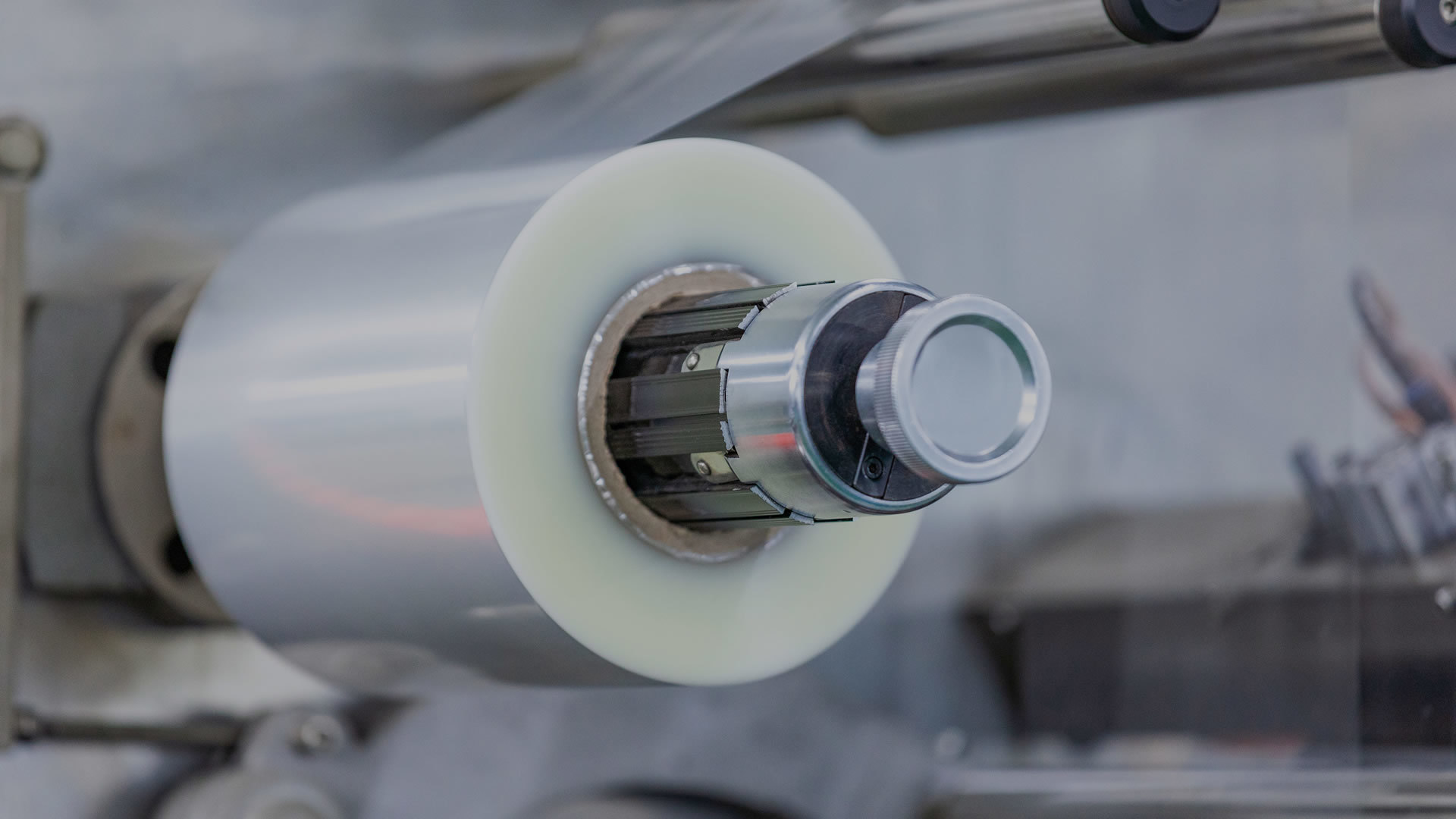
Packaging field
This is placeholder text.
Mechanical field
This is placeholder text.
More fields
This is placeholder text.
Product Inquiry

Company email:info@gwell.cn
Nantong Company Address: No. 69, Hongrong Road, Chongchuan District, Nantong City
Suzhou Company Address: No. 16, Donglin Lianfa Industrial Park, Guojia Road, Chengxiang Town, Taicang, Suzhou
Yancheng Company Address: No. 90, Shenfeng Road, Dafeng District, Yancheng City
Shanghai Company Address: Room 2205A, 22nd Floor, No. 28 Maji Road, China (Shanghai) Pilot Free Trade Zone
Nanjing Company Address: No. 8, Huyue East Road, Longchi Subdistrict, Liuhe District, Nanjing City, Jiangsu Province

Browse on mobile